Technology Infrastructure for Creative Businesses: Building Digital Foundations for Design and Creative Agencies

Introduction: Where Creativity Meets Technology
Creative businesses—design agencies, branding studios, creative consultancies—face unique technology challenges. Their work demands tools that support collaboration on visual assets, manage large files efficiently, protect intellectual property, and enable seamless client interactions. Yet many creative firms struggle with technology infrastructure that was designed for traditional office work rather than the dynamic, asset-heavy workflows of creative production.
The right technology infrastructure amplifies creative capabilities rather than constraining them. Cloud storage that syncs massive design files instantly. Collaboration tools that enable real-time feedback on visual work. Security that protects client work without creating friction. Project management that tracks creative workflows from concept to delivery. When technology works well, it becomes invisible, enabling creative teams to focus entirely on their craft.
This comprehensive guide explores technology infrastructure for creative businesses. From file management and collaboration to security and client delivery, we examine how creative firms can build digital foundations that support exceptional creative work.
Understanding Creative Workflow Requirements
Creative workflows have distinct characteristics that shape technology requirements.
|
Requirement |
Business Need |
Technology Implication |
|
Large File Handling |
Design files often gigabytes |
High-performance storage, fast sync |
|
Version Control |
Track design iterations |
Asset versioning, comparison tools |
|
Collaboration |
Team and client feedback |
Real-time tools, annotation capabilities |
|
Asset Organization |
Find files across projects |
DAM systems, metadata, search |
|
Client Delivery |
Share work professionally |
Portals, presentations, proofing |
Cloud Infrastructure for Creative Teams
Cloud infrastructure provides the flexibility and scalability that creative businesses need without the burden of managing physical servers.
Key Cloud Capabilities
- High-speed file synchronization across locations
- Scalable storage growing with project demands
- Remote access enabling work from anywhere
- Collaboration features built into storage platforms
- Automatic backup protecting against data loss
Creative businesses seeking professional IT infrastructure benefit from partnering with experienced managed IT providers who understand both technical requirements and creative workflow needs. These partnerships provide enterprise-grade capabilities without requiring in-house IT expertise, letting creative teams focus on their core work.
Digital Asset Management
As creative businesses grow, organizing and finding assets becomes increasingly challenging. Digital Asset Management (DAM) systems provide structure and searchability.
|
DAM Capability |
Function |
Business Value |
|
Centralized Library |
Single source of truth for assets |
No duplicate files, consistent access |
|
Metadata Tagging |
Categorize and describe assets |
Fast search and discovery |
|
Version History |
Track asset evolution |
Audit trail, recover previous versions |
|
Rights Management |
Track usage rights and licenses |
Compliance, avoid infringement |
|
Distribution |
Share assets internally and externally |
Efficient delivery, brand consistency |
Collaboration and Communication
Creative work is inherently collaborative. Tools must support both internal team collaboration and external client engagement.
Internal Collaboration
- Real-time co-editing of documents and designs
- Visual feedback tools for design review
- Project communication keeping discussions contextual
- Video conferencing for remote team collaboration
Client Collaboration
- Proofing systems for structured feedback collection
- Client portals providing project visibility
- Approval workflows formalizing sign-off processes
- Secure file sharing protecting confidential work
Project and Resource Management
Creative project management requires tools that accommodate non-linear workflows and visual work products.
|
Function |
Purpose |
Common Tools |
|
Project Tracking |
Monitor progress and deadlines |
Asana, Monday, Basecamp |
|
Resource Planning |
Allocate team capacity |
Float, Resource Guru, Forecast |
|
Time Tracking |
Capture hours for billing |
Harvest, Toggl, Clockify |
|
Budget Management |
Track project economics |
Integrated PM tools, spreadsheets |
|
Workflow Automation |
Streamline repetitive processes |
Zapier, Make, native integrations |
Security for Creative Businesses
Creative firms handle confidential client work, unreleased campaigns, and valuable intellectual property. Security breaches can damage client relationships and expose liability.
Security Priorities
- Access control ensuring only authorized team members see client work
- Encryption protecting files in storage and transit
- Secure sharing for external collaboration
- Backup and recovery protecting against data loss
- Device security for laptops and mobile devices
Maintaining security requires ongoing attention. Implementing vulnerability monitoring across business systems ensures security gaps are identified before they can be exploited, protecting both client work and business reputation.
Hardware and Workspace Technology
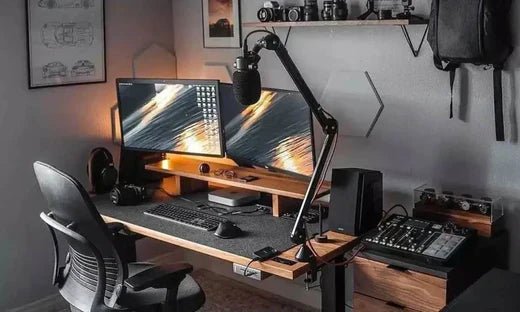
Creative work demands capable hardware. Investment in appropriate tools improves productivity and work quality.
|
Category |
Considerations |
Recommendations |
|
Workstations |
CPU, RAM, GPU for creative apps |
Spec for heaviest applications used |
|
Displays |
Color accuracy, resolution |
Calibrated monitors, appropriate size |
|
Input Devices |
Precision, ergonomics |
Quality mice, tablets, keyboards |
|
Networking |
Speed for large file transfers |
Gigabit minimum, consider 10G |
|
Peripherals |
Scanners, printers, cameras |
Quality appropriate to work needs |
Client Delivery and Presentation
How work is delivered affects client perception as much as the work itself.
- Branded portals presenting work professionally
- Organized delivery packages with clear structure
- Multiple format options for different uses
- Secure transfer for confidential materials
- Archive systems for long-term access
Scaling Creative Technology
As creative businesses grow, technology must scale without becoming a bottleneck.
- Start with flexible, cloud-based systems
- Establish processes and standards early
- Invest in training to maximize tool value
- Plan for integration between systems
- Review and optimize regularly
Technology Investment Prioritization
Budget constraints require prioritizing technology investments for maximum impact.
|
Priority |
Investment Area |
Impact |
|
Critical |
Reliable storage and backup |
Business continuity, client trust |
|
High |
Collaboration tools |
Team productivity, client experience |
|
High |
Security fundamentals |
Risk mitigation, compliance |
|
Medium |
Project management |
Efficiency, visibility |
|
Medium |
Asset management |
Organization, reuse potential |
|
Lower |
Advanced automation |
Optimization once basics solid |
Conclusion: Technology as Creative Enabler
Technology infrastructure should enable creativity, not constrain it. When files sync instantly, collaboration happens seamlessly, and security works invisibly, creative teams can focus entirely on producing exceptional work.
The investment in getting technology right pays dividends in productivity, client satisfaction, and peace of mind. Creative businesses that build strong digital foundations create competitive advantages that are difficult for competitors to replicate.
Build the infrastructure your creative work deserves. The technology foundation you create today will power your creative success tomorrow.
Related Articles