
Yves Saint Laurent Logo Design: History & Evolution

Image Courtesy of Yves Saint Laurent
The story of Yves Saint Laurent logo design is a fascinating chapter in fashion luxury logo history. From the iconic interlocking YSL monogram to the modern Saint Laurent wordmark, its visual identity reflects changing fashion trends while preserving the house’s Parisian heritage.
Founded in 1961 by Yves Saint Laurent and Pierre Bergé, the brand quickly became associated with bold creativity and refined elegance. Its original Cassandre-designed monogram captured that character through intertwined initials that became one of fashion’s most recognizable symbols.
Here is how the Yves Saint Laurent logo design evolved through typography, structure, and changing approaches to luxury branding.
Yves Saint Laurent Logo Design History
1962 - 2012
From 1962 to 2012, the Yves Saint Laurent identity centered on a monochrome wordmark accompanied by the famous YSL emblem. The intertwined capital letters created a compact symbol that expressed sophistication while remaining instantly recognizable.
The accompanying wordmark emphasized the initials of Yves, Saint, and Laurent through slightly enlarged letters. Its elongated typography created a sense of refinement and cohesion, complementing the more decorative monogram.
Black and white became the identity’s signature palette, although gold was occasionally used to reinforce the brand’s luxurious character. Over five decades, this consistency helped the Yves Saint Laurent logo earn a distinctive place in brand logo history.
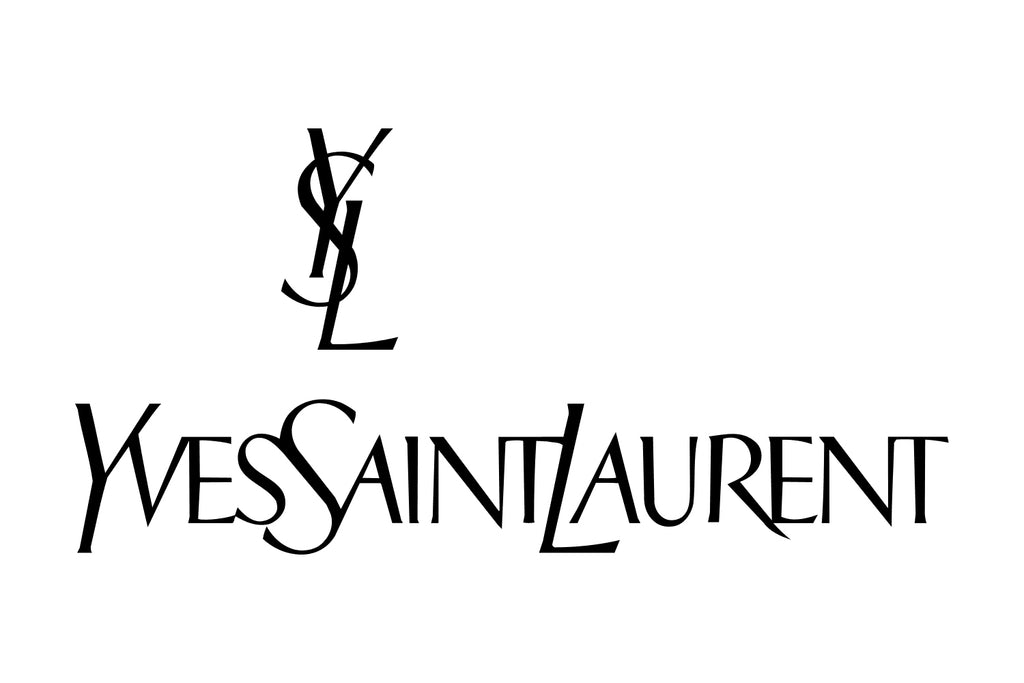
Image Courtesy of Yves Saint Laurent
2012 - Present
In 2012, the fashion house introduced a major identity change, shifting emphasis from “Yves Saint Laurent” to “Saint Laurent.” The new wordmark replaced the decorative character of the classic identity with bold, clean sans-serif typography.
The Saint Laurent name appears above “Paris,” maintaining a connection to the house’s origins. Spacious lettering and a restrained composition give the design a contemporary, minimalist appearance while preserving an understated sense of luxury.
The redesign represented more than a name change. It signaled a new creative direction while allowing the historic YSL monogram to remain part of the wider brand identity.
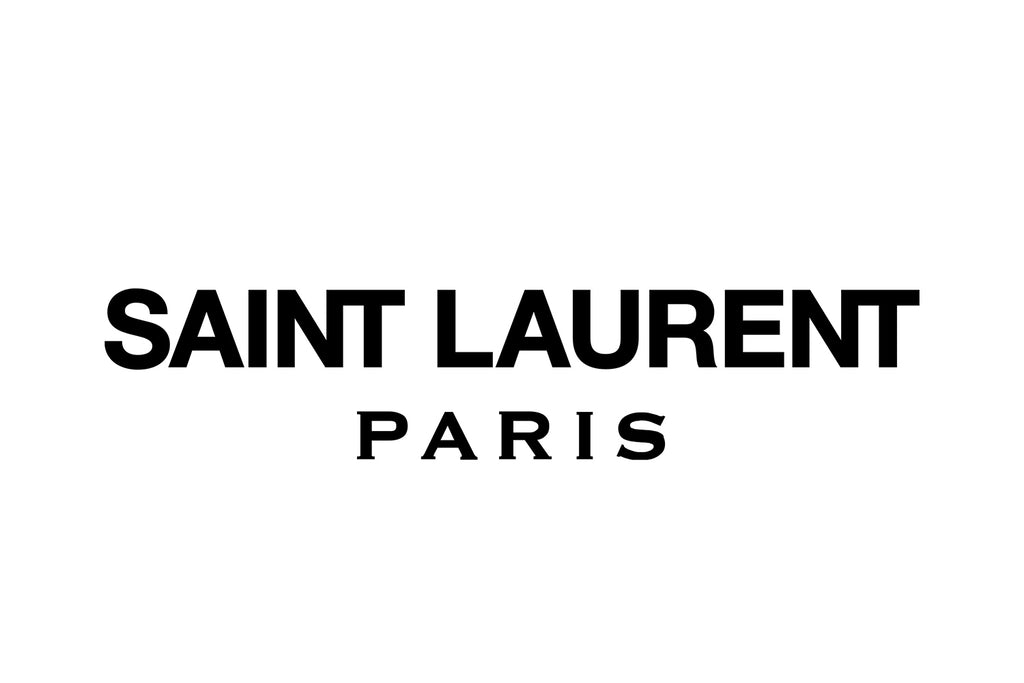
Image Courtesy of Yves Saint Laurent
Who Created The Iconic Yves Saint Laurent Logo Design?
The iconic Yves Saint Laurent logo was created by Adolphe Jean-Marie Mouron, better known as Cassandre. Famous for his Art Deco posters and mastery of geometric composition, Cassandre was commissioned to create an identity that matched the young fashion house’s modern spirit.
His solution was the interlocking YSL monogram. Rather than arranging the initials conventionally, Cassandre intertwined Y, S, and L vertically, combining sharp lines and graceful curves into a balanced composition.
The design treated typography almost like sculpture. Its elongated structure communicated elegance while its unusual arrangement made the emblem immediately distinctive. At a time when many luxury identities relied on more traditional decorative symbols, YSL felt modern and confident.
Although the brand introduced the minimalist Saint Laurent wordmark in 2012 under Hedi Slimane, Cassandre’s monogram remained visible on handbags, accessories, and beauty products. Its longevity demonstrates how a strong typographic idea can transcend changing fashion trends.
Continue Reading
- Dolce & Gabbana Logo Design: History & Evolution
- Emporio Armani Logo Design: History & Evolution
- Fendi Logo Design: History & Evolution
- Givenchy Logo Design: History & Evolution
- Gucci Logo Design: History & Evolution
How Does Yves Saint Laurent Logo Design Reflect Luxury Branding?
The Yves Saint Laurent logo design demonstrates how restraint can communicate luxury. Cassandre’s original monogram relies on elegant typography rather than elaborate imagery, using carefully intertwined initials to create prestige and recognition.
Minimalism strengthens that effect. Clean lines and negative space allow the logo to work across packaging, storefronts, advertising, leather goods, and metal hardware without losing its identity. The predominantly black-and-white palette further reinforces its timeless and sophisticated character.
The 2012 Saint Laurent wordmark extended this minimalist approach. Its cleaner sans-serif typography introduced a more contemporary image while the YSL monogram preserved the house’s heritage. Together, they show how a luxury identity can evolve without abandoning its most recognizable visual asset.
Consistency has also been crucial. Despite changes in presentation, strong typography, restrained color, and balanced composition continue to define the brand. The result is an identity that combines heritage with modern relevance.
How Has Typography Shaped Yves Saint Laurent Logo Design Identity?
Typography is central to the Yves Saint Laurent visual identity. Cassandre’s original monogram transformed three initials into a single distinctive emblem, using elongated lines, contrasting strokes, and carefully controlled overlaps to create movement and elegance.
The unusual vertical arrangement helped YSL stand apart from conventional horizontal fashion wordmarks. Its serif letterforms conveyed refinement and tradition while remaining modern enough to represent a fashion house known for challenging conventions.
Typography reshaped the identity again in 2012 when Hedi Slimane introduced the simplified Saint Laurent wordmark. The clean sans-serif lettering created a sharper, more contemporary appearance without relying on new symbols or dramatic colors.
Today, the two typographic approaches coexist. The historic YSL monogram remains prominent on products and beauty packaging, while the Saint Laurent wordmark appears across campaigns and storefronts. Together, they demonstrate how typography can preserve heritage while signaling a new creative era.
How the Classic Yves Saint Laurent Logo Became a Luxury Icon
Consistency Across Decades
One striking feature of Yves Saint Laurent logo history is how little the core monogram needed to change.
Fashion moves rapidly, and many brands repeatedly update their logos to reflect new creative directions. The YSL symbol, however, accumulated recognition precisely because it remained familiar.
Every repeated appearance strengthened the connection between those three intertwined letters and the fashion house behind them.
Over time, customers no longer needed to see "Yves Saint Laurent" spelled out to understand what the monogram represented.
The Monogram as a Design Element
The YSL mark gradually became more than a corporate logo.
On accessories in particular, the initials could function as part of the physical design itself. Metal versions appeared as closures, decorative hardware, pendants, and prominent exterior details.
This transformed the logo into an ornament.
For customers, carrying a bag with a large YSL emblem communicates the brand immediately. From a design perspective, that is an unusually powerful position for a visual identity: the trademark is not merely printed onto the product but can become part of its construction and aesthetic character.
Recognition Without the Full Brand Name
The strongest monograms work independently of surrounding text, and YSL reached that level of recognition.
Its unusual vertical structure, intertwined letters, and long-term use allow the symbol to communicate the brand with very little supporting information.
That recognition later became especially valuable when the fashion house made one of the biggest changes in its branding history.
What Makes the Yves Saint Laurent Logo Design Enduring
Distinctive Letter Interaction
A successful logo must first be recognizable, and Cassandre's monogram achieves that through its unusual structure.
The letters overlap closely enough to form a unified mark but remain separate enough for viewers to identify Y, S, and L.
That balance is difficult to achieve. Too much overlap would make the symbol confusing, while too little would reduce it to three ordinary initials.
Elegance Without Excessive Detail
The YSL logo also occupies an effective middle ground between minimal and decorative design.
It is more elaborate than a simple wordmark, yet it contains no unnecessary illustration or surrounding ornamentation. Its elegance comes almost entirely from typography and proportion.
That allows the symbol to remain effective at different scales and in different materials.
Printed in black on paper, embossed into leather, or rendered as polished metal hardware, it remains unmistakably YSL.
Heritage as Part of the Design
Today, the logo's strength cannot be separated from its history.
Decades of use have added associations that were not present when the symbol was first created. Fashion collections, advertising campaigns, fragrances, accessories, and cultural visibility have all contributed to its meaning.
The design itself is strong, but its longevity has made it even stronger.
What the Yves Saint Laurent Logo Evolution Shows About Luxury Branding
The evolution of the Yves Saint Laurent identity demonstrates that modernization does not always require abandoning the past.
When Saint Laurent introduced a dramatically simpler wordmark, the fashion house could have eliminated the older YSL symbol entirely. Instead, the two identities continued to coexist.
This illustrates an important distinction in branding. A company can change the way its name is presented while preserving another visual element with strong recognition and historical value.
For audiences, the Saint Laurent name and YSL monogram now serve complementary purposes. One reflects the contemporary identity of the fashion house, while the other preserves an immediate connection to its founder and heritage.
That continuity helps explain why Cassandre's original design remains relevant decades after its creation.
Frequently Asked Questions
Who Designed the Original YSL Logo?
The famous interlocking YSL monogram was designed by French graphic designer Adolphe Mouron Cassandre. He arranged the initials of Yves Saint Laurent vertically, combining different letter shapes into one elegant symbol. The unusual composition became one of the most recognizable monograms in luxury fashion.
What Do the Letters in the YSL Logo Stand For?
YSL stands for Yves Saint Laurent, the name of the fashion house and its founder. Although the initials originally functioned as an abbreviation, decades of consistent use transformed them into an independent visual symbol that can identify the brand even when the complete Yves Saint Laurent name does not appear.
Why Did Yves Saint Laurent Change Its Logo to Saint Laurent?
The fashion house began emphasizing the Saint Laurent name after Hedi Slimane became creative director in 2012. The change supported a new creative direction and introduced a cleaner, more minimal wordmark. However, it did not completely replace the historic YSL monogram, which continued to appear across important product categories.
Is the YSL Logo Still Used Today?
Yes. The historic YSL monogram continued to play an important role even after the Saint Laurent rebranding. It remains especially recognizable on accessories, beauty products, and decorative hardware. Its continued use allows the fashion house to maintain a visible connection between its contemporary identity and its historic Yves Saint Laurent heritage.
Conclusion
The Yves Saint Laurent logo history is unusual because its most famous symbol has survived major changes in the brand around it. Cassandre's intertwined YSL initials created a distinctive identity that remained recognizable for decades, while the later Saint Laurent wordmark introduced a much simpler contemporary direction.
Rather than making one identity completely replace the other, the fashion house allowed both to serve different purposes. The result shows why a truly distinctive logo can become more than branding. With enough recognition and cultural meaning, it can become a lasting part of a fashion house's heritage.
You May Also Like
- Balmain Logo Design: History & Evolution
- Burberry Logo Design: History & Evolution
- Calvin Klein Logo Design: History & Evolution
- Chanel Logo Design: History & Evolution
- Dior Logo Design: History & Evolution
Let Us Know What You Think!
Every information you read here are written and curated by Kreafolk's team, carefully pieced together with our creative community in mind. Did you enjoy our contents? Leave a comment below and share your thoughts. Cheers to more creative articles and inspirations!
Related Articles




Leave a Comment