
Procreate Vs. Illustrator: Which Software is Better for Logo Design

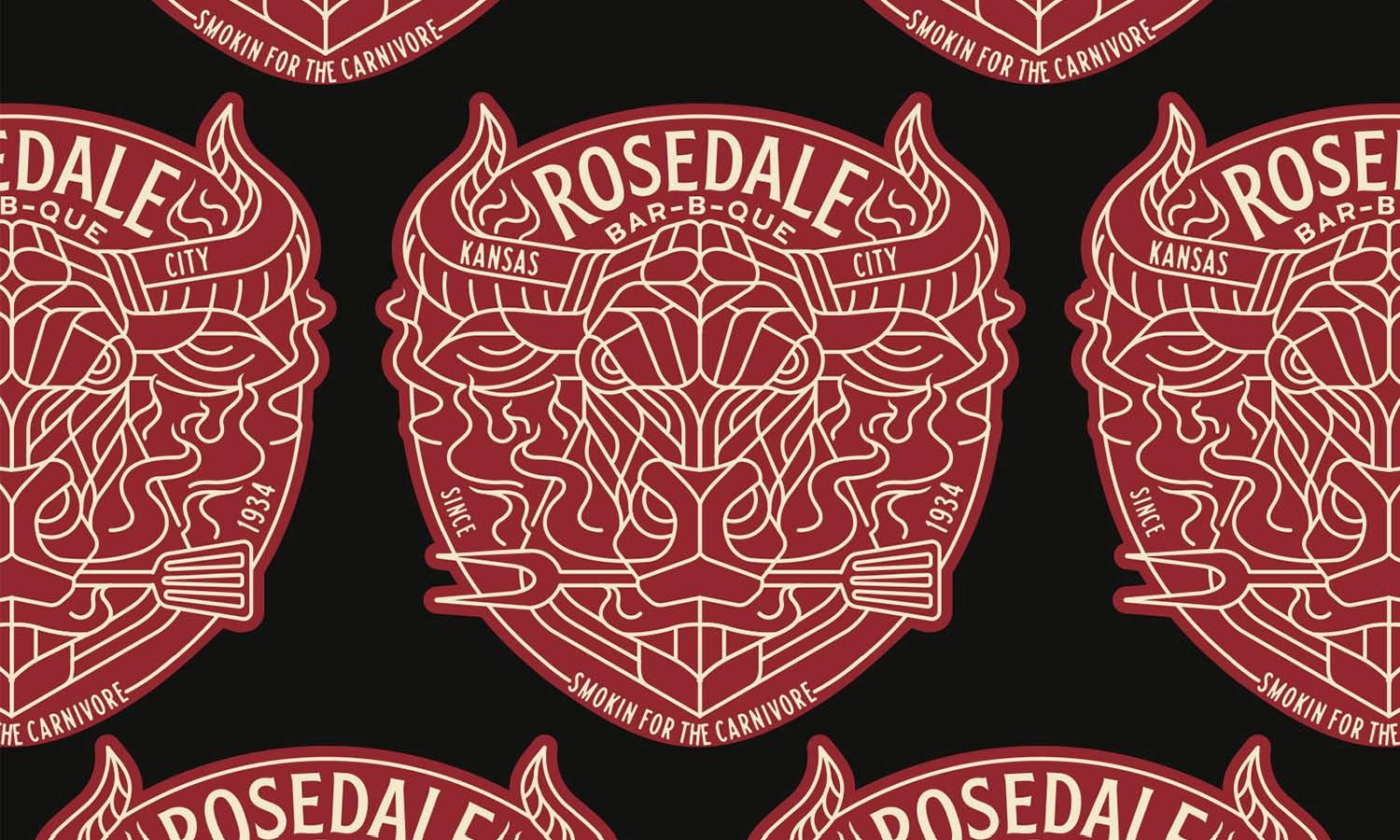
Source: Eddie Lobanocskiy, ⟁, Dribbble, https://dribbble.com/shots/19787405
Choosing between Procreate and Illustrator for logo work usually comes down to how you prefer to create and what you need from the finished file. Procreate feels intuitive for drawing, sketching, and exploring ideas by hand, while Illustrator is built around precise vector construction and scalable artwork. Both can play a useful role in logo development, but they are not equally suited to every stage of the process. A Procreate vs Illustrator logo design comparison is especially useful if you are deciding whether to work entirely on an iPad, move into vector software, or combine both tools. The key differences appear in sketching, editing, typography, scalability, and file preparation. Understanding those differences makes it easier to choose a workflow that fits both your creative habits and the practical demands of professional logo design.
How Procreate and Illustrator Approach Logo Design Differently
The biggest difference between Procreate and Illustrator is the way each program builds artwork. That difference affects nearly every stage of logo creation, from the first sketch to the final exported files.
Procreate’s Raster-Based Workflow
Procreate is primarily a raster drawing app, so artwork is made from pixels. Its strength is the natural drawing experience, especially when paired with an Apple Pencil. You can sketch symbols, test shapes, experiment with lettering, and build expressive marks without feeling restricted by technical tools. This makes Procreate particularly appealing when the early logo concept depends on hand-drawn character or loose exploration. The tradeoff is that pixel-based artwork has a fixed resolution, so enlarging it too far can reduce sharpness.
Illustrator’s Vector-Based Workflow
Illustrator creates vector graphics using paths, anchor points, and mathematically defined shapes. Instead of drawing with pixels, you construct artwork that can be resized without losing quality. That makes Illustrator better suited to logos that need clean geometry, consistent curves, controlled spacing, and dependable scaling. Its workflow can feel more technical than Procreate, but that structure becomes valuable when the logo moves from an idea into a finished brand asset.
Which Software Is Better for Sketching Logo Ideas?
During the concept stage, speed and freedom often matter more than perfect construction. This is where Procreate tends to feel especially comfortable.
Sketching Naturally in Procreate
Procreate lets you approach logo concepts much like you would with pencil and paper. Pressure-sensitive brushes make it easy to create thumbnails, handwritten lettering, symbols, and rough compositions quickly. You can duplicate layers, test variations, and erase or redraw without interrupting your creative rhythm. For designers who think through drawing, this directness can make concept generation feel faster and less rigid.
Developing Concepts in Illustrator
Illustrator can also be used for rough concepts, but it encourages a more structured approach. You may build ideas from basic shapes, use the Pen Tool, or work with simplified vector forms from the start. This can be an advantage for geometric logos, monograms, and designs that already depend on symmetry or precise construction. However, for loose experimentation, Illustrator often feels less spontaneous than Procreate.
Procreate Vs. Illustrator for Precision and Logo Editing
Once a promising concept has been selected, precision becomes much more important. This is one area where the Procreate vs Illustrator logo design comparison becomes clearer.
Editing Shapes and Curves
Illustrator gives you detailed control over individual paths, anchor points, and handles. You can adjust a curve without redrawing the entire shape, refine symmetry, and make small structural changes with considerable accuracy. Procreate offers selection, transform, snapping, and drawing-assist tools, but editing remains more pixel-based. If a curve needs significant adjustment, you may need to redraw or reshape part of the artwork rather than simply move a vector point.
Adjusting Logo Elements
Illustrator also makes it easier to reposition separate elements, align objects, distribute spacing, and build consistent proportions. This becomes useful when creating alternate layouts or making client revisions. Procreate can handle these tasks on separate layers, but complex changes can become less flexible as the artwork develops.
Working With Typography
Both programs support text, but Illustrator offers much stronger typographic control. Kerning, tracking, baseline adjustments, outlines, and precise character positioning are easier to manage. For wordmarks, lettermarks, and logos where type plays a major role, Illustrator is usually the more capable choice.
Scalability and File Quality for Professional Logos
Scalability is one of the most important practical differences between the two programs. A logo may need to appear on a tiny label one day and a large sign the next, so the source artwork needs to hold up across many sizes.
Scaling a Logo Without Losing Quality
Illustrator’s vector artwork can be enlarged or reduced without becoming pixelated. The same logo file can be used for a business card, packaging, vehicle graphics, or large-format signage while retaining crisp edges. Procreate artwork depends on the canvas dimensions and resolution selected at the beginning. A high-resolution canvas gives you more flexibility, but it still has limits. Enlarging raster artwork beyond its available pixel data can soften edges or expose visible pixels.
Preparing Logos for Different Uses
For web graphics, social media assets, and certain digital applications, a high-resolution Procreate file may be perfectly usable. Problems become more likely when the logo must be adapted to many print and production environments. Illustrator offers greater flexibility because the master logo can remain vector-based and then be exported at whatever dimensions or formats are needed.
Logo File Formats and Exporting
Export requirements often determine whether a logo file is genuinely ready for professional use.
Exporting From Procreate
Procreate supports useful formats such as PNG, JPEG, TIFF, PSD, and PDF. These are convenient for sharing previews, transparent graphics, layered artwork, and many digital applications. However, exporting from Procreate does not automatically turn raster artwork into a true vector logo. If a printer, client, or production company requests editable vector paths, the design may still need to be rebuilt or converted in vector software.
Exporting From Illustrator
Illustrator can provide AI, EPS, SVG, PDF, PNG, and other commonly requested formats. Because the original artwork remains vector-based, you can supply scalable files alongside raster versions for websites or presentations. This is a major advantage when preparing a complete logo package for real-world use.
Which Software Offers the Faster Logo Design Workflow?
Speed depends on the stage of the project rather than the number of features in each program.
When Procreate Feels Faster
Procreate is often quicker when you are exploring ideas. You can open a canvas, choose a brush, and start drawing with very little setup. It works especially well for thumbnails, hand-rendered marks, and rapid visual experiments. For designers who naturally sketch, this can reduce friction at the beginning of a project.
When Illustrator Becomes More Efficient
Illustrator usually becomes faster once the logo requires repeated adjustments. Moving anchor points, changing proportions, aligning shapes, creating color variations, and preparing alternate lockups can all be done without rebuilding the design. A revision that might require repainting part of a raster image can often be handled with a few vector edits. For longer logo projects with multiple rounds of refinement, that flexibility can save significant effort.
Can You Use Procreate and Illustrator Together for Logo Design?
You do not necessarily have to choose one program for the entire project. In many cases, combining them creates a more comfortable workflow.
Starting the Concept in Procreate
Procreate can handle the exploratory stage. You can sketch symbols, draw custom lettering, test compositions, and develop several visual directions quickly. Once a concept feels strong, the sketch can be exported as a reference.
Finishing the Logo in Illustrator
The selected concept can then be imported into Illustrator and rebuilt as vector artwork. You can refine curves, correct proportions, improve spacing, clean up typography, and simplify shapes where needed. This workflow preserves the expressive freedom of drawing while gaining the production advantages of vectors. It can be especially useful for logos that begin with hand-drawn character but still need to function as polished brand assets.
Procreate Vs. Illustrator Logo Design: Which One Should You Choose?
The better choice depends on what you expect the software to do for you.
Choose Procreate If
Procreate makes sense if your main priority is sketching, drawing, or developing hand-made visual ideas. It is also a strong fit if you prefer working directly on an iPad with an Apple Pencil and want a simple, tactile creative environment. For early-stage concept work, it can feel more immediate than Illustrator.
Choose Illustrator If
Illustrator is the stronger choice when you need a finished logo that can scale cleanly, support detailed revisions, and be delivered in professional vector formats. It is particularly useful for geometric marks, typography-heavy logos, and projects that require multiple layouts or production files. For many professional logo projects, Illustrator is better suited to the final construction stage, even when the original concept was created elsewhere.
Conclusion
Procreate and Illustrator are both valuable for logo design, but they solve different problems. Procreate is strongest when the work begins with drawing, experimentation, and visual exploration. Illustrator becomes more useful when the concept needs precision, scalable vector construction, controlled typography, and flexible final files. In a Procreate vs Illustrator logo design workflow, the choice does not have to be absolute. Designers who prefer sketching by hand can develop ideas in Procreate and then move the strongest concept into Illustrator for refinement. If you only want one program for producing complete, scalable logo files, Illustrator is generally the more capable tool. If drawing freedom matters most during ideation, Procreate can make the creative stage much more natural.
Let Us Know What You Think!
Every information you read here are written and curated by Kreafolk's team, carefully pieced together with our creative community in mind. Did you enjoy our contents? Leave a comment below and share your thoughts. Cheers to more creative articles and inspirations!
Related Articles








Leave a Comment