
Blackwork Tattoos Explained: History, Techniques & Modern Styles
Blackwork tattoos are known for their strong visual presence, deep black ink, and striking use of contrast. Rather than relying on a wide color palette, this style builds impact through solid black areas, bold linework, negative space, pattern, and texture.
What makes blackwork especially interesting is its range. Some designs are simple and graphic, while others are highly detailed, ornamental, geometric, or illustrative. The term does not refer to one single look so much as a broader approach centered on black ink.
For anyone considering this style, it helps to understand where it comes from, how artists create it, and why certain designs work better than others. From historically influenced patterns to experimental modern compositions, blackwork tattoos continue to evolve while keeping a strong connection to contrast, structure, and visual clarity.
What Are Blackwork Tattoos?
Blackwork tattoos are tattoos created primarily, and often entirely, with black ink. Their defining quality is not the subject matter but the way the design uses dark pigment, line, shape, and open skin to create a bold composition.
A blackwork piece might feature an animal, floral motif, abstract pattern, geometric arrangement, or ornamental design. What ties these approaches together is their reliance on black as the main visual element.
Solid Black Ink and Strong Contrast
Many blackwork designs use areas of dense, saturated black to create weight and emphasis. These dark sections can make a tattoo feel dramatic even when the overall design is relatively simple.
Contrast is equally important. Artists often place heavy black areas beside untouched skin so the composition remains clear rather than becoming visually muddy. This balance is one reason blackwork can appear especially strong from a distance.
Negative Space as Part of the Design
In blackwork, uninked skin is often just as important as the ink itself. Negative space may form lines, symbols, decorative breaks, or entire shapes within a darker composition.
Used carefully, it gives the eye somewhere to rest and prevents the tattoo from feeling overly dense.
The History Behind Blackwork Tattoos
The modern term “blackwork” is relatively broad, but tattooing with black pigment has a much longer history. Across different cultures, dark pigments have been used to create symbolic patterns, decorative markings, and identity-based body art for centuries.
It is important, however, not to treat all historic black tattoo traditions as one style. Polynesian, Southeast Asian, Indigenous, and other tattooing practices developed within their own cultural systems, meanings, tools, and visual languages.
Traditional Roots of Black Tattooing
Many historical tattoo traditions relied heavily on dark pigments because they were durable, visually clear, and suited to the materials available at the time.
Patterns could represent status, ancestry, spirituality, protection, community, or personal milestones. Repeated motifs, strong shapes, and large black areas appeared in different forms across many regions.
Modern blackwork artists sometimes draw visual inspiration from traditional pattern-based tattooing, but respectful design requires understanding the difference between general aesthetic influence and culturally specific symbols.
The Rise of Contemporary Blackwork
As modern tattooing expanded, artists began using black ink in increasingly experimental ways. Geometric compositions, ornamental pieces, abstract forms, illustrative subjects, and large-scale blackout work became associated with contemporary blackwork.
Today, the style can feel traditional, futuristic, minimal, decorative, or highly expressive depending on the artist.
How Blackwork Tattoos Are Created
The strength of blackwork tattoos depends heavily on technique. Because there is little color to distract from inconsistencies, clean saturation, intentional linework, and controlled spacing are especially noticeable.
Different artists combine several methods depending on the design.
Solid Black Packing
Black packing refers to creating areas of dense, consistent black ink. These sections need to appear even rather than patchy, particularly in larger pieces.
Artists typically work methodically to achieve strong saturation while considering how the skin will heal. Large black areas can require patience because overworking the skin can affect both healing and the final result.
Bold Linework
Some blackwork pieces use thick outlines or structural lines to define forms.
Bold linework works especially well for graphic designs, traditional-inspired motifs, and illustrations that need to remain readable from farther away. Line weight can also help separate detailed areas from heavier blocks of black.
Stippling and Dotwork
Not all blackwork is solid and heavy. Stippling and dotwork allow artists to create texture, shading, and gradual transitions while still working entirely in black.
Dense dots can create darker areas, while wider spacing produces lighter tones. This method is often used in geometric, ornamental, and illustrative blackwork.
Negative Space
Negative space is a technique as much as a design principle. Artists may intentionally leave skin untouched to create borders, highlights, patterns, and internal details.
When carefully planned, these spaces can make an otherwise dark tattoo feel much more open and structured.
Popular Modern Blackwork Tattoo Styles
Contemporary blackwork tattoos appear in several recognizable forms. These categories often overlap, and many artists combine techniques rather than working within one strict style.
Geometric Blackwork
Geometric blackwork uses shapes, symmetry, grids, circles, repeated forms, and carefully measured linework.
Some designs are minimal, while others extend across large areas of the body in complex patterns. Precision is especially important because small inconsistencies can become obvious when repeated elements are involved.
Ornamental Blackwork
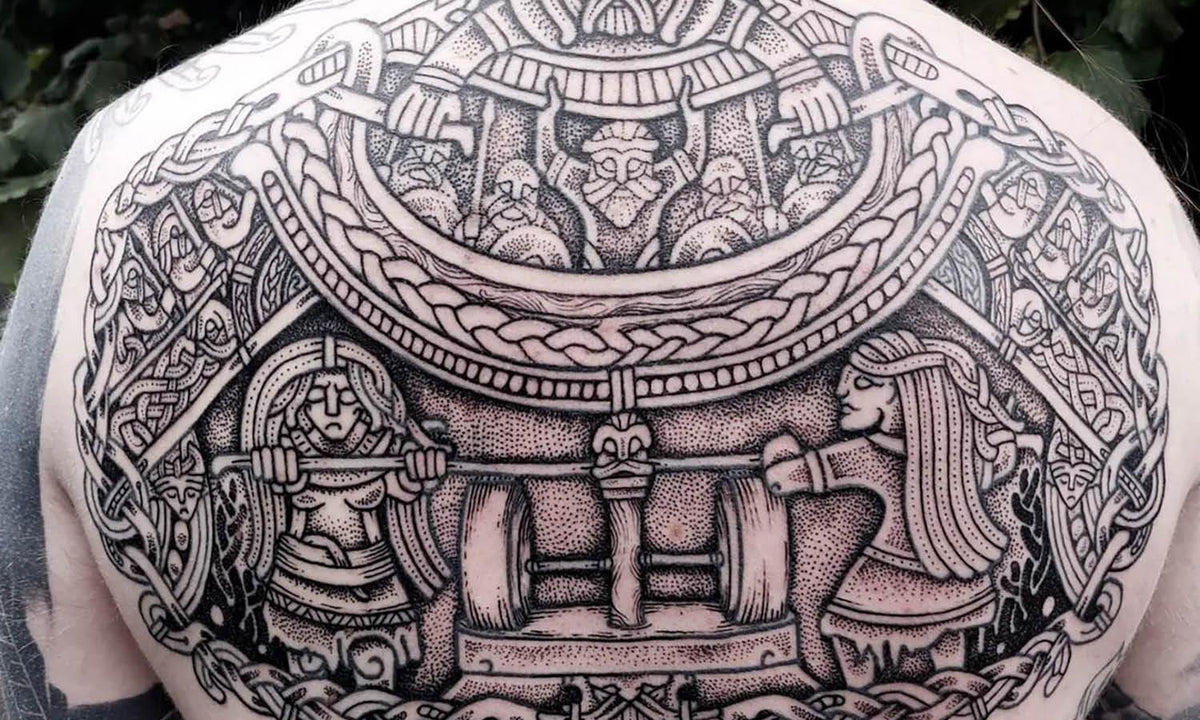
Ornamental designs often draw inspiration from decorative architecture, filigree, lace-like patterns, jewelry, and symmetrical motifs.
These tattoos can feel elegant while still maintaining the visual strength associated with blackwork. They are often designed to follow the natural shape of the body.
Illustrative Blackwork
Illustrative blackwork can depict animals, plants, figures, mythological subjects, objects, or symbolic imagery.
Artists may combine heavy outlines with detailed textures, stippling, and solid black shadows. The result often resembles printmaking, engraving, or ink illustration translated onto skin.
Abstract Blackwork
Abstract blackwork gives artists more freedom to experiment with shape and movement.
Designs may include brush-like marks, irregular forms, distorted geometry, splashes, or unconventional compositions. Rather than representing a specific subject, these tattoos often focus on visual energy and contrast.
Blackout and Heavy Blackwork
Blackout tattoos use very large areas of solid black, sometimes covering significant portions of an arm, leg, or other body area.
Some people choose blackout work purely for its visual effect, while others use it to cover existing tattoos. Negative-space patterns can also be incorporated into blackout compositions for added structure.
What Makes Blackwork Tattoos Visually Effective?
A successful blackwork tattoo involves more than simply adding a large amount of black ink. Composition matters just as much as saturation.
The strongest designs usually have a clear hierarchy, with dark areas, open skin, and detail working together rather than competing for attention.
Balance Between Black and Skin
Too much uninterrupted darkness can make certain designs difficult to read, especially when viewed from a distance.
Leaving carefully planned areas of bare skin creates separation and allows individual shapes to stand out. This balance often gives blackwork tattoos their distinctive graphic quality.
Matching the Design to the Body
Placement can dramatically change how a blackwork piece feels.
Large curves, repeated patterns, and long lines can be shaped around muscles, joints, and natural body contours. A design that works well on a flat page may need substantial adjustment before it works equally well on an arm, shoulder, thigh, or back.
Choosing the Right Level of Detail
Detailed blackwork can look impressive when freshly tattooed, but scale matters.
Very fine lines and tiny gaps may visually soften over time as skin changes. Larger shapes, clearer spacing, and stronger structural elements can help the design remain readable for longer.
Things to Consider Before Choosing Blackwork
Blackwork can be visually striking, but it is worth thinking carefully about how much black you want, where the design will sit, and who will tattoo it.
These choices can make a major difference in the finished piece.
Size and Placement
Some blackwork tattoos work beautifully at a small scale, especially simple symbols or graphic motifs.
More complex geometric, ornamental, or illustrative designs usually benefit from additional space. Giving the artist enough room allows negative space, pattern, and detail to remain clear rather than compressed.
Artist Experience
Look for an artist whose portfolio includes the specific kind of blackwork you want.
A strong portfolio should show consistent saturation, controlled linework, balanced compositions, and ideally healed examples. Fresh tattoos can look impressive immediately after a session, but healed work provides a better indication of technical consistency.
Commitment to Heavy Black Ink
Large areas of black create a strong and permanent visual statement.
They can also be more difficult to alter later than lighter designs. Before committing to extensive blackwork or blackout tattooing, consider how the piece will interact with future tattoos and whether you are comfortable with such a dominant visual element.
Frequently Asked Questions About Blackwork Tattoos
Are Blackwork Tattoos Always Completely Black?
No. Blackwork tattoos are primarily created with black ink, but that does not mean every part of the design must be filled solid black. Many pieces combine bold shapes with thin lines, stippling, patterns, and large areas of untouched skin to create contrast and visual variety.
Do Blackwork Tattoos Have to Be Large?
Blackwork can work at many different sizes. Small tattoos often rely on simple silhouettes, bold lines, or compact patterns. Larger pieces provide more room for detailed illustration, geometric repetition, ornamental elements, and negative space, making them especially suitable for more complex compositions.
What Is the Difference Between Blackwork and Black and Gray Tattoos?
Blackwork generally emphasizes solid black ink, defined shapes, linework, pattern, and strong contrast. Black and gray tattooing usually uses diluted black pigment to produce softer shades and gradients. That makes black and gray particularly common in realism, portraiture, and other designs that depend on smooth tonal transitions.
Can Blackwork Tattoos Include Detailed Designs?
Yes. Blackwork can be extremely detailed. Artists may use fine lines, dots, engraving-inspired textures, or intricate ornamental patterns within a larger composition. The key is maintaining enough contrast and spacing so those details remain readable instead of disappearing into surrounding areas of heavy black.
Conclusion
Blackwork tattoos are defined by more than their color. Their strength comes from the relationship between solid black ink, clean linework, negative space, texture, and thoughtful composition.
From historically influenced patterns to modern geometric, ornamental, illustrative, and abstract approaches, the style offers considerable creative range. If you are considering blackwork, pay close attention to scale, placement, and an artist’s technical experience. A well-designed piece should not simply look dark; it should use contrast intentionally to create clarity, rhythm, and lasting visual impact.
Related Articles








Leave a Comment