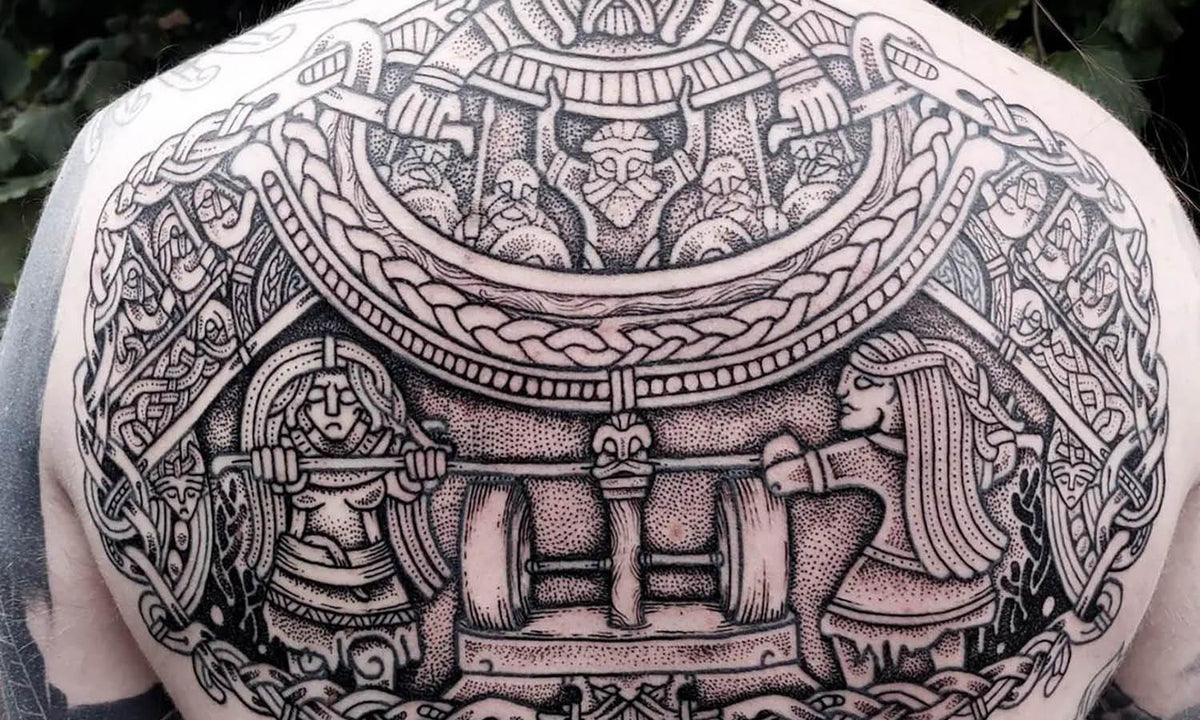
30 Best Mythology Tattoo Ideas You Should Check

Source: Luoyo_tattoo, Instagram, https://www.instagram.com/p/C8o0zE6qpKX/
Ancient myths are filled with images that seem made for tattoos: a wolf breaking its chains, a goddess spreading her wings, or a hero sailing toward an impossible challenge. The best mythology tattoo ideas draw on those striking moments while retaining something of the stories behind them. Greek, Norse, Egyptian, Japanese, Celtic, Chinese, and other traditions provide very different visual languages, so there is far more to explore than portraits of famous gods. A mythology tattoo might celebrate resilience through a legendary creature, express curiosity through a wisdom deity, or mark a personal turning point through a story of descent and return. Some designs work as compact emblems; others unfold across a larger area like scenes from an illustrated epic. The key is to choose a particular myth, not just a vaguely ancient aesthetic. These 30 concepts explore divine figures, elemental powers, supernatural creatures, underworld narratives, sacred objects, and heroic journeys, with ideas for making each interpretation visually distinctive.
Mythology Tattoo Ideas

Source: Tantattoogallery, Instagram, https://www.instagram.com/p/DRzTsjUDUsI/

Source: Alexxtiplea, Instagram, https://www.instagram.com/p/C7UcVV9onMh/

Source: Canaslan.ink, Instagram, https://www.instagram.com/p/DQ9ppFRCDck/

Source: Hami_shin, Instagram, https://www.instagram.com/p/C4fm6RPiXCP/

Source: Kibavu_tattoo, Instagram, https://www.instagram.com/p/DUKXzULDWXx/

Source: Txttooing, Instagram, https://www.instagram.com/p/C5ftnI_Nx4B/

Source: Tearsink, Instagram, https://www.instagram.com/p/Cykyv9GNAZ6/

Source: Tinascka.tt, Instagram, https://www.instagram.com/p/DUGim0_Dqpb/

Source: Yunuskgnc, Instagram, https://www.instagram.com/p/DTQB-gEjJ84/

Source: Zygocia, Instagram, https://www.instagram.com/p/DS5R7GPDdFS/

Source: Mr.j.fineline, Instagram, https://www.instagram.com/p/DRx3lhnjJye/

Source: Luoyo_tattoo, Instagram, https://www.instagram.com/p/C7MIK-dKiPV/

Source: Paradyme.ttt, Instagram, https://www.instagram.com/p/C66XxZiqAXo/

Source: Casso_tattoo, Instagram, https://www.instagram.com/p/C8kKPKmi9Vw/

Source: Shadestudio.uk, Instagram, https://www.instagram.com/p/DSVXFNVDPxJ/

Source: Cagriesk, Instagram, https://www.instagram.com/p/DRRputACE9r/

Source: Pierremoraestattoo, Instagram, https://www.instagram.com/p/C2r0HgwAk_b/

Source: Fiistattoo, Instagram, https://www.instagram.com/p/C1AEpOWtF5x/

Source: Kibavu_tattoo, Instagram, https://www.instagram.com/p/DTeDRU3iZFO/

Source: Kibavu_tattoo, Instagram, https://www.instagram.com/p/DS0KilqCQ77/

Source: Vrezendetattoo, Instagram, https://www.instagram.com/p/DQ7DL8NkTOt/

Source: Oz.inkz, Instagram, https://www.instagram.com/p/C5wxcMbOnAe/

Source: Rene.bach, Instagram, https://www.instagram.com/p/C3SJfxNNWRB/

Source: Hami_shin, Instagram, https://www.instagram.com/p/C5dWl6KivaW/

Source: Tedflinntstxne, Instagram, https://www.instagram.com/p/C6By20so-Ob/

Source: Bood_alex_tattoo, Instagram, https://www.instagram.com/p/C7eV0eAurWM/

Source: Hami_shin, Instagram, https://www.instagram.com/p/C6tLMlniI4p/

Source: Renaldo_tattoo, Instagram, https://www.instagram.com/p/C8EqKAmN0Wk/

Source: Inkedmag, Instagram, https://www.instagram.com/p/DEtBmMoTfmb/

Source: Luoyo_tattoo, Instagram, https://www.instagram.com/p/C8o0zE6qpKX/
Divine Figures Representing Wisdom and Spiritual Power
Not every mythological deity rules through force. These figures make compelling tattoos because their identifying objects carry as much meaning as their faces.
Athena With an Owl
Set Athena in profile with an owl perched beside her helmet. The bird introduces quiet intelligence to an otherwise martial silhouette, reflecting the Greek goddess's association with wisdom, strategy, and craftsmanship.
Odin With His Ravens
Place Odin beneath the sweeping wings of Huginn and Muninn. Different directions of flight can suggest thought and memory searching beyond the central portrait, giving the Norse god a restless, inquisitive presence.
Isis With Outstretched Wings
Shape the Egyptian goddess's wings into a broad protective arc around a smaller central figure or symbol. The composition emphasizes her connections to protection and restoration without relying on a conventional seated portrait.
Amaterasu With a Sacred Mirror
Frame a polished mirror with restrained rays of sunlight. Reflections and negative space evoke Amaterasu, the Japanese sun goddess, while letting the sacred mirror carry the narrative instead of depicting her literally.
Brigid With an Eternal Flame
Let an upright flame emerge from a vessel beside subtle tools of craft. Inspired by Brigid's associations with poetry, healing, and smithcraft, this design suits someone drawn to creativity as a sustaining force.
Mythological Forces of Battle and Nature
Thunder, fire, and conflict lend these designs their energy. Composition matters here: the surrounding movement should reveal what makes each figure formidable.
Zeus Holding a Lightning Bolt
A jagged bolt cutting diagonally across Zeus's silhouette creates immediate tension. Keep the clouds secondary so his gesture—not an overloaded background—communicates the authority of the Greek sky god.
Thor Surrounded by Storm Clouds
Show Thor's hammer emerging from dense cloud bands, with flashes of light breaking the darkness. A low viewing angle gives the scene weight, suggesting the thunder god's strength through scale rather than exaggerated anatomy.
Sekhmet With a Lioness Head
Combine Sekhmet's lioness features with a sun disk and severe, symmetrical lines. Her Egyptian mythology links fierce destructive power with protection, creating an image that feels imposing without needing a battle scene.
Susanoo Facing the Eight-Headed Serpent
Use the serpent Yamata no Orochi's overlapping necks to surround a small, determined Susanoo. This Japanese myth becomes a dramatic composition about confronting a seemingly overwhelming adversary, especially when the forms twist across the skin.
The Morrígan With a Battle Raven
A raven crossing a shadowed battlefield can suggest the Morrígan without a detailed human portrait. The Irish mythological figure's links to warfare and fate make the bird's ominous stillness particularly expressive.
Legendary Creatures and Shapeshifting Beings
Creatures allow more freedom with anatomy and motion than formal deity portraits. Their appeal often lies in crossing boundaries between animal, human, and supernatural worlds.
Chinese Dragon Among the Clouds
Stretch a serpentine dragon through layered clouds, allowing its body to curve naturally around the chosen placement. Flowing whiskers and claws distinguish it from Western dragon imagery, while the overall scene suggests auspicious power.
Kitsune With Nine Flowing Tails
Arrange nine fox tails like a fan behind a watchful face. Subtle shifts in the tails' shapes add an uncanny effect, connecting the Japanese kitsune with magic, transformation, and accumulated supernatural ability.
Fenrir Breaking His Chains
Capture the moment links snap around Fenrir's shoulders rather than simply drawing a snarling wolf. The broken restraints evoke the Norse giant wolf's terrifying destiny and give the illustration a clear dramatic center.
Phoenix Rising From the Flames
Build a bird from tapering feathers that gradually become flames. Rather than filling every space with fire, preserve a clean ascending silhouette so the familiar mythic theme of destruction and renewal remains readable.
Celtic Selkie Between Two Worlds
Divide a flowing image between a seal in the water and a human figure on shore. Drawn from selkie folklore, the transition expresses longing and divided belonging more sensitively than a literal half-human creature.
Underworld Legends, Fate, and Rebirth
Underworld myths explore separation, judgment, and changing identities. Their tattoos become richer when the emotional stakes are visible alongside darker imagery.
Medusa With a Serpent Crown
Give Medusa a steady, direct gaze while snakes form an elaborate crown. Her ancient stories and later reinterpretations differ, allowing the portrait to explore danger, vulnerability, or defiance without reducing her to a monster.
Hades and Persephone in the Underworld
Contrast the dark architecture of Hades's realm with flowers near Persephone. Two opposing textures can tell a story about the underworld and seasonal return without turning the pair into generic romantic figures.
Anubis With the Scales of the Heart
Place Anubis beside balanced scales, echoing Egyptian funerary judgment scenes. A carefully drawn heart and feather communicate the moral weight of the ceremony more effectively than extra ornaments or invented hieroglyphs.
Hel With a Divided Face
Treat Hel's face as a deliberate division between living flesh and deathly shadow, recalling her contrasting appearance in Norse sources. Restrained contrast makes the unsettling image more compelling than excessive horror details.
Inanna's Descent Through Seven Gates
Depict seven diminishing doorways leading toward a solitary figure. The Mesopotamian goddess's descent becomes an architectural tattoo about relinquishment and transformation, inviting a quieter interpretation of mythic power.
Sacred Symbols and Mythological Objects
An artifact or emblem can carry an entire story in a smaller composition. Accuracy matters especially when the symbol still has religious or cultural significance.
Yggdrasil With Interwoven Roots
Give the Norse world tree an unusually intricate root system, not just an impressive crown. The balance of branches and roots suggests interconnected realms, making the design feel expansive even without other characters.
Eye of Horus With Ornamental Details
Keep the Eye of Horus's recognizable shape intact, then add restrained Egyptian-inspired borders. Because it has a protective history, careful treatment of its proportions matters more than decorative complexity.
Mjölnir With Norse Knotwork
Center Thor's hammer within a modest knotwork frame, leaving room around its silhouette. The result reads clearly as a symbol of the god's power and protection rather than a crowded assortment of Viking motifs.
The Labyrinth of the Minotaur
Design the maze as a graphic pattern with a tiny bull-headed silhouette at its center. This reference to the Minotaur shifts attention from combat to the mystery and danger of finding a way through.
The Three Fates and Their Thread
Use one continuous thread passing through three pairs of hands. The Greek Moirai's spinning, measuring, and cutting of life's thread create a striking minimalist narrative about limits, choices, and mortality.
Mythic Heroes and Legendary Journeys
A journey tattoo captures a specific turning point rather than a static emblem. Selecting one recognizable action gives these complex stories visual focus.
Icarus Falling Toward the Sea
Show Icarus suspended between an immense sun and a thin line of waves. Scattered feathers imply the failure of his wings, allowing the myth's tension between aspiration and consequence to remain central.
Odysseus Sailing Past the Sirens
Place a small ship beneath looming siren shapes, with Odysseus bound to the mast. The contrast between restraint and temptation makes this an unusually psychological scene within Greek adventure mythology.
Sun Wukong Leaping Through the Clouds
Draw the Monkey King's staff on a sharp diagonal as he vaults between clouds. His playful defiance and extraordinary abilities, celebrated in the Chinese novel Journey to the West, reward a lively illustrative approach.
Māui Raising His Magical Fishhook
Make the fishhook the visual anchor of a scene recalling Māui's feats across Polynesian storytelling traditions. Choose one culture's version with care rather than mixing sacred patterns and narratives indiscriminately.
Gilgamesh Entering the Cedar Forest
Frame Gilgamesh and Enkidu as small travelers approaching towering cedars. Their scale conveys anticipation before the confrontation ahead, turning a Mesopotamian epic episode into a meditation on ambition and companionship.
Choosing a Mythology Tattoo That Fits Your Vision
The most satisfying design decisions begin with the story, then move toward the artwork. A striking image becomes more personal when you understand what its details communicate.
Connecting the Myth to Personal Meaning
Read beyond a brief character description. The particular episode you relate to—Athena's judgment, Fenrir's restraint, or Inanna's descent—may lead to a more distinctive design than the figure alone.
Matching Artistic Detail to Placement
Complex encounters require enough room for faces, objects, and movement to remain distinguishable. Small tattoos generally benefit from one clear emblem, while larger placements can accommodate layered scenes and atmospheric backgrounds.
Respecting Cultural and Religious Context
Check where a symbol originates and whether it remains sacred within a living tradition. Use reliable references, seek artists familiar with its visual history, and avoid combining unrelated motifs merely because they look similar.
Frequently Asked Questions
What Are the Most Popular Mythology Tattoo Ideas?
Greek gods, Norse figures, Egyptian symbols, and mythical creatures remain familiar starting points because their attributes are immediately recognizable. Popularity, however, need not determine your design. A less familiar scene from an epic may communicate a more precise idea and give an artist greater storytelling possibilities.
Which Mythology Tattoos Symbolize Strength and Protection?
Mjölnir and the Eye of Horus are closely associated with protection in their respective traditions, while Thor and Sekhmet convey formidable power. Their meanings are not interchangeable: one may represent divine guardianship, another fierce authority. Choose the story and cultural context that aligns with what you actually want to express.
Are Mythology Tattoos Suitable for Small Designs?
Yes, provided the image has a simple, identifiable structure. A sacred mirror, hammer, eye, or single feather can stay legible at a modest scale. An elaborate scene involving several figures usually needs more room, especially if facial expressions and fine details are essential to understanding the narrative.
Which Tattoo Styles Work Best for Mythological Designs?
Black-and-gray realism can capture expressive deity portraits, while illustrative styles suit battles and legendary journeys. Fine-line work favors clear symbols and restrained compositions. Rather than choosing a technique first, look at the concept's most important feature—texture, motion, facial expression, or geometry—and discuss how it will age with your artist.
How Can I Choose a Mythology Tattoo Without Misrepresenting Its Meaning?
Start with the original cultural tradition, then compare reputable retellings and visual references. Distinguish historically established symbols from modern fan art or invented designs. When a motif carries active religious significance, ask knowledgeable practitioners or specialists about appropriate use, and allow that research to shape the final composition.
Conclusion
Mythology has survived for centuries because its stories leave room for interpretation. The same character might represent courage to one person and a warning about ambition to another. That freedom gives mythology tattoos their personal significance. Rather than trying to capture an entire legend, consider the single moment that interests you most. It could be a difficult decision, an unexpected transformation, or a confrontation that changes everything. Even the smallest detail can suggest a much larger narrative when placed in the right context. There is no need to explain every symbol through the artwork. Some of the most intriguing tattoos leave part of the story for others to discover.
Let Us Know What You Think!
Every information you read here are written and curated by Kreafolk's team, carefully pieced together with our creative community in mind. Did you enjoy our contents? Leave a comment below and share your thoughts. Cheers to more creative articles and inspirations!
Related Articles



Leave a Comment