
What Makes a Tattoo Design Timeless Instead of Trend-Driven?
Some tattoos immediately reveal the era in which they were created, while others still feel visually relevant decades later. The difference is rarely as simple as choosing an old-school motif instead of following a modern style. Timeless tattoo designs usually combine clear ideas, strong composition, thoughtful placement, and imagery that continues to matter beyond a temporary trend.
A tattoo does not need to be traditional, minimalist, or deeply symbolic to feel timeless. Contemporary and experimental designs can have just as much staying power when they are created intentionally. What matters most is whether the design still works when its surrounding trend disappears.
Understanding that distinction can help you choose a tattoo that reflects your taste now without depending entirely on what happens to be popular at the moment.
What Actually Makes a Tattoo Design Timeless?
A timeless tattoo usually begins with a strong central idea. The viewer should be able to understand what the design is about without having to untangle too many competing elements.
A Clear Central Idea
Good tattoo design often comes down to visual clarity. A rose, snake, portrait, abstract shape, or symbolic object can all work when the composition gives the eye somewhere to focus.
Problems can appear when too many unrelated ideas are squeezed into the same design. Adding extra symbols simply because they seem meaningful can dilute the original concept rather than strengthen it.
A clear idea also gives the tattoo room to breathe stylistically. The artist can interpret it through different line weights, textures, colors, or levels of detail without losing the core image.
Meaning That Extends Beyond a Trend
Personal meaning can create another layer of longevity. This does not mean every tattoo needs a dramatic story.
A design might simply represent a flower you have always loved, an animal you identify with, a place that matters to you, or an image you consistently find beautiful.
The important distinction is whether your connection exists independently of the design's popularity.
Visual Balance
Strong proportions, controlled negative space, and an obvious focal point make tattoos easier to read. These basic design principles are not tied to any particular trend, which is one reason they contribute so strongly to visual longevity.
Timeless Subject Matter Versus Trend-Driven Imagery
Certain subjects have appeared in tattooing for generations because they allow endless reinterpretation. Flowers, animals, celestial imagery, mythological figures, meaningful objects, and natural forms are common examples.
Their longevity does not mean that choosing one automatically creates a timeless tattoo.
Familiar Motifs With Room for Interpretation
A rose can become traditional, realistic, geometric, fine-line, illustrative, or completely abstract. A snake might wrap around the arm, interact with another object, or become part of a larger composition.
Subjects with this kind of flexibility often remain interesting because artists can reinterpret them while preserving the central idea.
Their visual identity does not depend on one particular moment in tattoo culture.
When a Popular Motif Can Still Feel Timeless
Popularity is not automatically a warning sign.
A motif might be appearing everywhere while still having personal relevance to you. If you have loved stars, butterflies, bows, dragons, or botanical imagery for years, their current popularity does not suddenly make them bad choices.
The important question is whether you would still want the image if the trend disappeared tomorrow.
Signs an Idea May Be Mostly Trend-Led
Trend-driven choices often begin with exposure rather than genuine interest.
If you repeatedly see one tattoo style online and suddenly feel compelled to get exactly the same composition, it may be worth giving the idea more time. The same applies when the surrounding aesthetic excites you more than the tattoo subject itself.
Waiting helps separate lasting preference from temporary visual familiarity.
Why Style Matters as Much as Subject
The same subject can feel completely different depending on how it is drawn.
A tiger designed around readable shapes and balanced contrast may remain visually strong even as tattoo trends change. The same tiger could feel closely tied to a specific period if its entire appeal depends on a fashionable visual effect.
Strong Foundations Tend to Last
Some design qualities consistently support longevity:
Readable silhouettes, intentional line weight, controlled detail, balanced contrast, and cohesive composition all help a tattoo feel visually resolved.
These fundamentals matter whether the tattoo is traditional, illustrative, realistic, abstract, or contemporary.
They also help the image remain understandable from different distances instead of relying only on tiny details that photograph well up close.
Avoid Designing Only for the Current Feed
Social media has changed how tattoo designs are viewed. Many tattoos are now encountered as carefully framed photographs rather than as artwork moving naturally with the body.
That can encourage designs optimized primarily for screens.
Before choosing a style, imagine the tattoo without dramatic lighting, close-up photography, filters, or curated styling. If the underlying artwork still appeals to you, the concept probably has stronger foundations than something that depends entirely on presentation.
Timeless Does Not Mean Conservative
Experimental tattooing can still have lasting appeal.
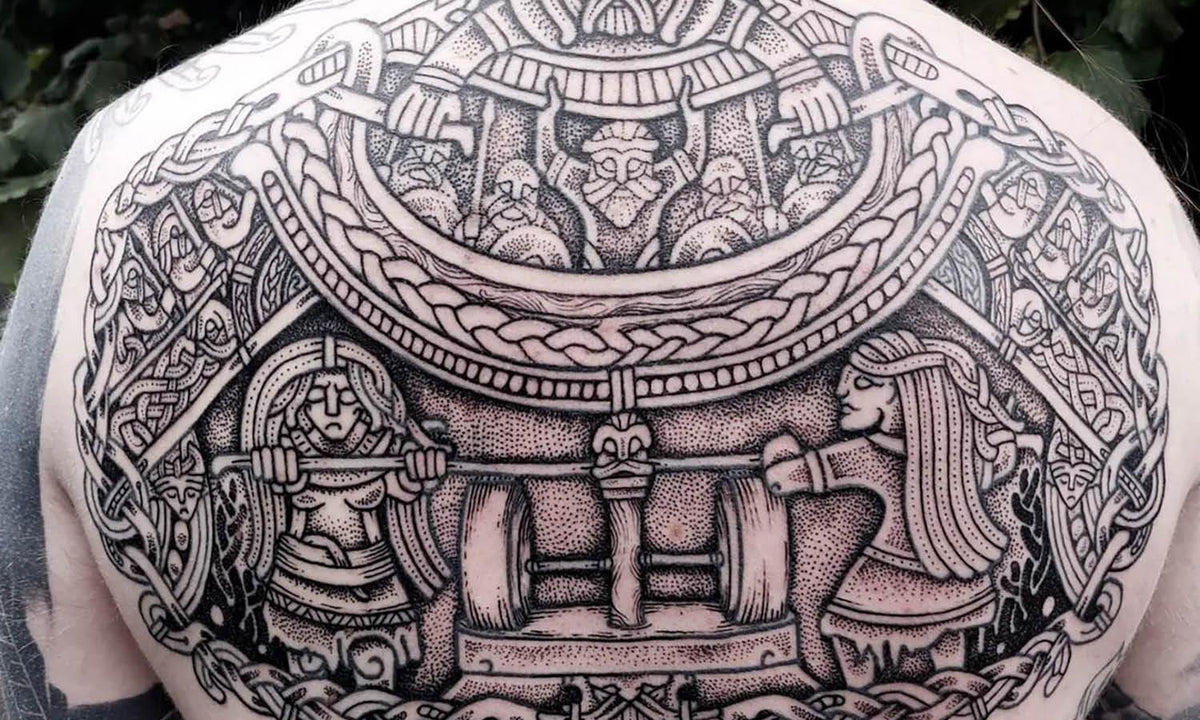
Bold abstraction, unusual compositions, contemporary illustration, and unconventional imagery can all work when the artist understands shape, balance, and visual hierarchy.
Timelessness is not about making every tattoo look traditional. It is about giving the design enough visual structure to stand on its own.
Personal Relevance Is One of the Strongest Filters
One of the easiest ways to evaluate a tattoo idea is to examine why you want it.
The answer does not need to be profound, but understanding your motivation can reveal whether the idea comes from long-term preference or temporary excitement.
Ask Why You Want the Tattoo
Your motivation might come from a personal memory, a visual style you have admired for years, a particular artist's work, or simply a subject you genuinely enjoy.
All of those can be valid reasons.
The concern arises when the only explanation is that the image currently appears everywhere. Repeated exposure can make almost anything feel desirable for a while.
Try separating the tattoo itself from the cultural moment surrounding it.
Imagine the Design Outside Its Current Context
Consider how you would feel about the design if it disappeared from social media completely.
Would you still enjoy looking at the subject?
Would its symbolism still matter?
Would you still appreciate the composition if nobody around you recognized the aesthetic?
These questions do not guarantee that your tastes will never change, but they can reveal whether your interest already has a stronger foundation than simple trend participation.
Placement and Scale Can Influence Timelessness
Even a strong tattoo concept can feel awkward if its proportions do not suit its placement.
Thoughtful scale and positioning help the artwork feel intentionally designed for the body rather than placed onto it as an isolated image.
Let the Design Fit the Body
The human body is three-dimensional and constantly moving. A tattoo can benefit from following natural curves, muscle structure, and available space.
Long designs often work naturally along limbs, while broader compositions may benefit from areas such as the back, chest, or thigh.
The goal is not to follow rigid placement rules, but to allow the shape of the tattoo and the shape of the body to support one another.
Give Important Details Enough Space
Highly detailed imagery needs sufficient room.
Trying to compress complex objects, text, ornamental elements, or multiple focal points into a very small area can weaken visual clarity.
An artist may suggest simplifying the drawing or increasing its size so the composition remains readable.
Consider the Larger Visual Picture
If you expect to get more tattoos later, consider how the current design might interact with future work.
Leaving useful negative space or choosing a placement that allows expansion can prevent the tattoo from feeling visually trapped by later additions.
How to Evaluate a Tattoo Idea Before Committing
You do not have to predict what tattoo culture will look like in twenty years. Instead, test whether your idea works without relying heavily on its current popularity.
Remove the Trend Context
Start by stripping away the references surrounding the idea.
Imagine that you never saw the tattoo on a celebrity, Pinterest board, Instagram account, or trend roundup. Would the subject still interest you?
If yes, that is a useful sign that your attraction goes deeper than visibility.
Simplify the Idea
Identify the most important part of the tattoo.
If the concept contains several decorative elements, consider removing them one at a time. Ask whether each piece contributes something meaningful to the composition.
A stronger tattoo is not necessarily a simpler tattoo, but every visual element should have a reason to exist.
Save the Design and Revisit It
Give yourself time with the idea.
Save references, step away from them, and return later. You may find that certain details become less appealing while the central concept continues to feel right.
That process can help you refine the design before anything becomes permanent.
Discuss Longevity With the Tattoo Artist
Your tattoo artist can also identify issues that are difficult to judge from reference images alone.
They may recommend adjusting the scale, changing line weight, simplifying small details, or repositioning the composition to better suit the body.
Good collaboration is especially valuable when creating timeless tattoo designs, because the final result should feel personal rather than like a direct reproduction of someone else's tattoo.
Timeless Does Not Mean You Must Avoid Trends
Tattooing has always evolved alongside art, fashion, technology, and culture. Completely avoiding trends is nearly impossible, and it is not necessary.
Every tattoo reflects its era to some degree.
A fashionable technique or popular motif can still become personally lasting when the design is adapted thoughtfully. You might choose a currently popular subject but alter its proportions, combine it with meaningful imagery, or work with an artist whose visual language feels genuinely suited to you.
Instead of asking whether a tattoo will remain fashionable forever, ask whether you can appreciate it after its popularity fades.
That is usually a much more useful standard.
Frequently Asked Questions
Can a Trendy Tattoo Still Become Timeless?
Yes. A tattoo can start within a popular trend and still have lasting personal and visual appeal. Custom composition, thoughtful placement, strong craftsmanship, and a genuine connection to the imagery can give a fashionable idea much more staying power than simply copying a design because it is currently popular.
Are Simple Tattoos More Timeless Than Detailed Tattoos?
Not necessarily. Simple tattoos can remain visually clear, but detailed artwork can be equally enduring when the composition is balanced and the scale supports the amount of detail involved. Timelessness depends more on intentional design, readability, and long-term personal appeal than on whether the tattoo is minimal or complex.
How Can I Tell if I Only Like a Tattoo Because It Is Trending?
Imagine the design without social media, celebrity references, styling, or the surrounding aesthetic. If you would still choose the subject and enjoy its appearance even if nobody else were getting similar tattoos, your interest probably extends beyond trend exposure. Giving the idea some time can make that distinction clearer.
Should I Change a Tattoo Idea if It Is Currently Popular?
No. Popularity alone is not a reason to abandon a tattoo you genuinely like. Instead, consider how the design could be personalized through composition, scale, placement, symbolism, or artistic interpretation. These decisions can make the final tattoo feel distinctly yours rather than like a direct copy of a current trend.
Conclusion
Timeless tattoo designs are not defined by one style, motif, or set of rules. They tend to come from thoughtful decisions about subject matter, composition, scale, placement, and personal relevance. A tattoo can be modern, experimental, or currently fashionable and still have lasting appeal when its design works beyond the trend surrounding it. Rather than trying to predict what will remain popular forever, focus on whether the image feels visually strong and genuinely connected to your own taste. That is usually the better foundation for a tattoo you can continue appreciating over time.
Related Articles









Leave a Comment