
The Fusion of AI and Bauhaus Principles

The Bauhaus movement, founded in early 20th-century Germany, transformed design by merging art, technology, and functionality into a cohesive philosophy. Its emphasis on simplicity, practicality, and harmony between form and purpose reshaped modern aesthetics across architecture, typography, and product design. Today, a new creative revolution echoes that same spirit—the integration of AI into design thinking.
AI operates as both a tool and collaborator, analyzing patterns, optimizing structures, and generating innovative outcomes that reflect the Bauhaus vision of uniting creativity with logic. Through machine learning, designers can explore geometric balance, visual hierarchy, and material efficiency in unprecedented ways. The connection between AI and Bauhaus lies in their shared belief: that technology should serve human creativity, not replace it.
This fusion brings forward a design philosophy that values function, simplicity, and adaptability while pushing the boundaries of artistic exploration. AI enhances the designer’s ability to interpret Bauhaus ideals in modern contexts—from digital interfaces to urban architecture—bridging historic wisdom with cutting-edge innovation. As the creative industry evolves, this partnership highlights how timeless Bauhaus principles continue to guide the future of intelligent and purposeful design.
Revisiting Bauhaus Ideals
The Bauhaus movement revolutionized the relationship between art, technology, and craftsmanship. Emerging in post–World War I Germany, it sought to eliminate the divide between fine and applied arts, promoting the idea that design should be both beautiful and functional. Bauhaus designers valued simplicity, structure, and purpose, emphasizing that every creative decision must serve human needs. These ideals continue to shape the foundation of modern design education and practice.
In the age of AI, these principles regain relevance. Artificial intelligence reflects the Bauhaus philosophy through its pursuit of efficiency, order, and user-centered design. By leveraging AI, designers can now analyze proportions, predict user behavior, and optimize layouts in ways that align perfectly with Bauhaus thinking. The core idea remains unchanged—technology should enhance the human experience rather than overshadow it.
AI-driven design tools mirror the Bauhaus workshop environment, where experimentation and collaboration were central to innovation. Just as Bauhaus integrated art with industrial production, AI integrates creativity with computation, enabling precision and consistency. Revisiting Bauhaus ideals through the lens of AI not only honors the movement’s legacy but also expands its reach, allowing designers to merge human intuition with machine logic in pursuit of purposeful beauty.
Functionalism Meets Data Intelligence
The Bauhaus principle of functionalism taught designers to prioritize utility over ornamentation. Every element in a design had to serve a clear function—nothing was purely decorative. This rational approach finds new life in the age of AI, where data-driven systems evaluate performance, usability, and efficiency with remarkable precision.
AI interprets functionality in quantifiable terms. It gathers and analyzes user data, helping designers make informed decisions about composition, scale, and color to enhance user interaction. In this way, AI becomes an extension of Bauhaus rationalism, ensuring that aesthetics are always backed by function.
For example, in architecture and digital design, AI can simulate user movement, test lighting efficiency, or optimize layouts to achieve clarity and flow—embodying the Bauhaus vision of design serving life. The algorithmic interpretation of user intent parallels the Bauhaus quest for universality and simplicity.
This synergy between functionalism and AI transforms the creative process into one of continuous refinement. Rather than guessing what might work, designers use AI insights to achieve precision without compromising beauty. The result is a modern interpretation of Bauhaus efficiency—one that integrates human creativity with computational intelligence to design environments and interfaces that are both elegant and essential.
Automation And Craftsmanship
The Bauhaus school valued craftsmanship as the essence of good design—an approach rooted in the artist’s hands-on understanding of materials, form, and function. In today’s digital landscape, AI redefines that craftsmanship by transforming manual processes into intelligent automation without diminishing creative intent. Rather than replacing the artisan, AI becomes a collaborative partner that amplifies precision, efficiency, and innovation.
Automation driven by AI mirrors the Bauhaus philosophy of unity between human creativity and mechanical production. Just as the Bauhaus embraced the machine as a creative tool, AI enhances craftsmanship by streamlining repetitive tasks and allowing designers to focus on conceptual thinking and emotional expression. It provides consistent results, eliminates human error, and accelerates experimentation—qualities that empower modern artisans to push creative limits.
Through generative design, AI interprets rules set by the designer and produces multiple variations, much like an apprentice learning from a master. This interaction preserves the spirit of craftsmanship while adapting it to digital realities. Whether in furniture modeling, architecture, or product visualization, AI ensures that every creation retains the Bauhaus balance of beauty and function. In essence, automation guided by AI embodies a new form of craftsmanship—precise, intelligent, and deeply human in its purpose.
Geometric Simplicity In Digital Contexts
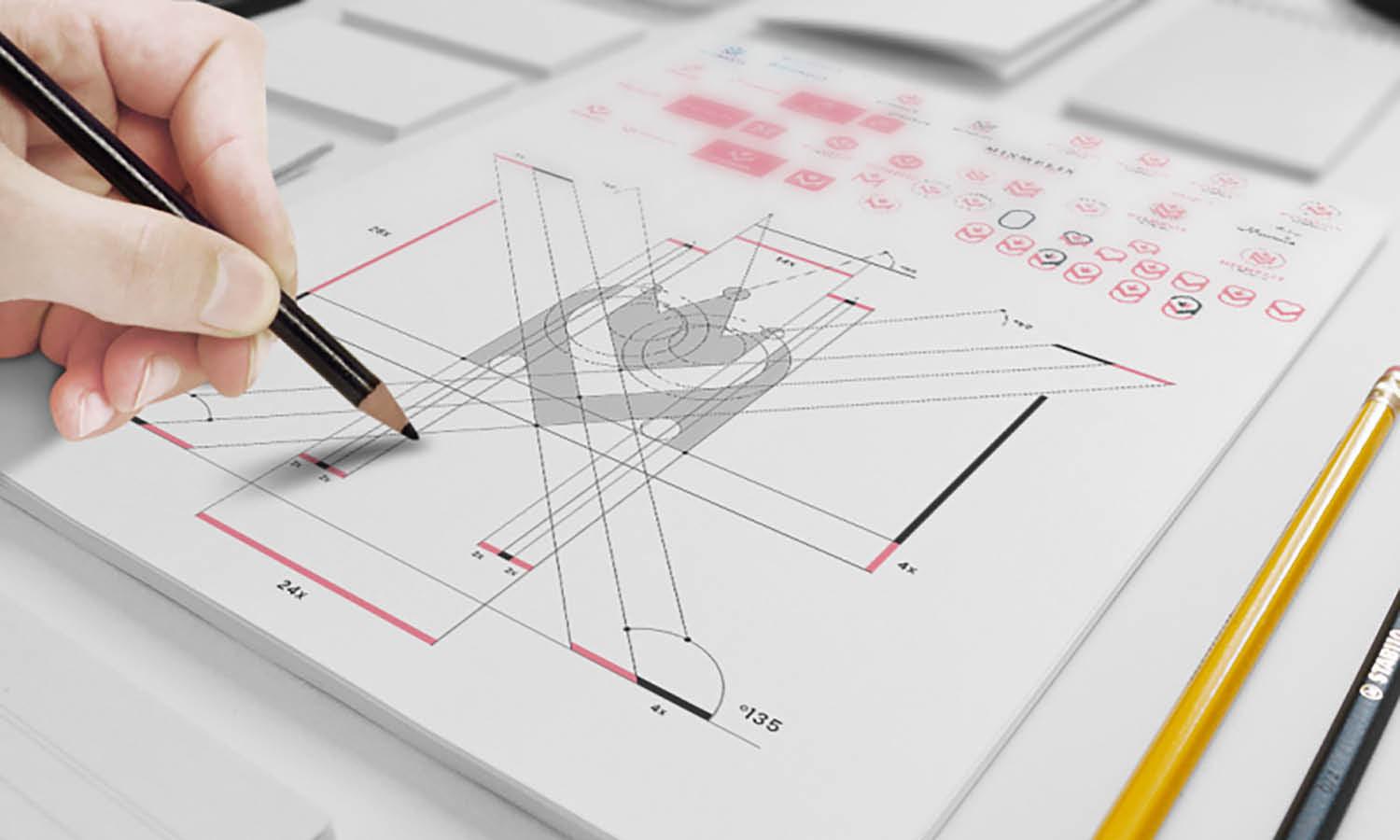
Geometric simplicity is one of the most recognizable traits of the Bauhaus aesthetic. Circles, squares, and triangles formed the basis of visual communication, representing clarity and balance. In the era of AI, these geometric foundations are reinterpreted through advanced computational processes that extend their timeless elegance into digital environments.
AI allows designers to manipulate geometric relationships dynamically, analyzing proportions and symmetry with mathematical precision. This capability transforms static compositions into adaptive systems—interfaces that respond to users, architectural forms that adjust to context, and branding elements that scale seamlessly across devices. The Bauhaus devotion to order and proportion finds a modern counterpart in AI’s algorithmic understanding of structure and hierarchy.
Machine learning can even simulate Bauhaus-inspired visual harmony by studying design datasets and generating compositions that echo minimalism and functionality. Designers, in turn, use these AI-generated insights to create layouts that are not only beautiful but responsive to human behavior and interaction.
In the digital context, geometric simplicity becomes fluid, guided by AI’s analytical power yet rooted in human intuition. This union reflects the enduring influence of Bauhaus—where simplicity is not reduction but refinement, and where technology continues to serve as a bridge between art and rational design.
Human-Centric Design Philosophy
At the core of Bauhaus thinking lies the belief that design must serve people. Functionality, comfort, and clarity were prioritized to enhance daily living. In today’s design world, AI extends this human-centric philosophy by interpreting data to understand user behavior, preferences, and needs with remarkable precision. Instead of dictating creativity, AI becomes a responsive system that adapts to individuals, promoting accessibility and emotional connection.
AI’s capacity for personalization echoes the Bauhaus commitment to universal usability. Whether designing digital interfaces or physical spaces, AI-driven insights help ensure designs remain intuitive and inclusive. It evaluates patterns in how users interact with products, translating this feedback into improvements that enhance both experience and efficiency. This dynamic relationship between user and technology fosters a deeper empathy in design practice.
Human-centered design with AI also emphasizes co-creation. Designers can collaborate with intelligent systems to prototype, iterate, and refine faster than ever while maintaining sensitivity to human emotion and context. The outcome is design that not only performs efficiently but resonates meaningfully. In essence, AI rejuvenates the Bauhaus vision of design for all—empowering creativity that celebrates humanity at every stage of the process.
Integration Of Art And Technology
The Bauhaus movement redefined design by merging art and technology into a single, harmonious discipline. It viewed machinery not as a threat to creativity but as an ally that could amplify artistic vision through modern materials and techniques. This philosophy finds its natural continuation in the age of AI, where algorithms and computation function as creative collaborators.
AI bridges the gap between artistic expression and technological innovation. It processes vast datasets to identify visual patterns, generate new compositions, and predict aesthetic outcomes. Designers can now use AI to explore color theory, form relationships, and material possibilities with an analytical precision that complements human imagination. This integration mirrors the Bauhaus ideal of balance between mechanical function and emotional resonance.
Moreover, AI enables an entirely new artistic dialogue—one where data becomes pigment and code becomes canvas. From generative architecture to digital illustration, AI tools embody the same experimental spirit that once drove the Bauhaus workshops. Rather than separating art from engineering, AI synthesizes both, reaffirming the timeless Bauhaus belief that design should unite creativity and industry in pursuit of beauty, purpose, and progress.
Minimalism With Computational Precision
Minimalism, a defining feature of Bauhaus design, emphasizes clarity, simplicity, and purposeful form. It rejects unnecessary ornamentation, allowing structure and function to speak for themselves. In the modern design landscape, AI enhances this minimalist philosophy by applying computational precision to achieve balance, proportion, and coherence across creative outputs.
Through algorithmic analysis, AI identifies optimal spatial relationships, color harmony, and visual hierarchy. This allows designers to refine layouts and compositions with unmatched accuracy while maintaining a human sense of restraint. The essence of minimalism—doing more with less—aligns seamlessly with AI’s ability to distill complex datasets into elegant solutions. Every element becomes intentional, every detail justified.
AI also aids in automating repetitive refinement processes, enabling designers to focus on conceptual integrity rather than manual adjustments. From user interfaces to architectural blueprints, AI ensures that minimalist principles translate fluidly across digital and physical spaces. This fusion of human creativity and machine precision results in a new level of functional beauty—one that honors Bauhaus ideals while adapting them to contemporary demands. Minimalism guided by AI is not cold or mechanical; it is meticulously balanced, human-centered, and timelessly efficient.
Sustainability And Optimization
Sustainability has become a central goal in modern design, and its roots can be traced back to the Bauhaus philosophy of efficiency and resource awareness. Bauhaus designers believed that beauty could be achieved through purposeful simplicity—a concept that aligns naturally with AI’s capacity for optimization and environmental mindfulness.
AI analyzes materials, processes, and energy consumption to suggest more sustainable design solutions. In architecture, it predicts environmental impact and recommends energy-efficient structures. In product design, AI models waste reduction, material reusability, and lifecycle durability. These intelligent systems transform sustainability from a moral choice into an integrated design process.
By automating simulations and performance tests, AI empowers designers to make data-informed decisions that balance aesthetics with environmental responsibility. This mirrors Bauhaus’s mission to unite practicality with creativity. Whether optimizing building forms for natural ventilation or refining digital interfaces for lower energy use, AI transforms sustainability into a measurable, actionable framework.
Ultimately, the partnership between AI and Bauhaus principles redefines responsible design. It encourages designers to create with both purpose and precision—crafting works that are visually refined, resource-efficient, and aligned with a future where technology and ecology coexist in harmony.
Adaptive Architectural System
The Bauhaus school introduced a revolutionary approach to architecture that emphasized flexibility, modularity, and harmony between structure and function. This vision resonates deeply in the age of AI, where adaptive architectural systems redefine how buildings respond to their environment and occupants. AI transforms static structures into intelligent ecosystems that learn, adjust, and evolve over time.
Using sensors, data analytics, and predictive algorithms, AI enables architecture to become dynamic. Buildings can regulate temperature, lighting, and airflow autonomously, optimizing comfort and energy efficiency. This reflects the Bauhaus ideal that form should follow function—only now, function becomes an evolving state, guided by data and human interaction.
AI-driven architecture also enhances spatial adaptability. Modular layouts can shift based on user needs, while generative design algorithms simulate countless configurations to identify the most efficient structural solutions. These systems merge aesthetic refinement with practical responsiveness, ensuring that buildings remain relevant and sustainable throughout their lifespans.
In essence, AI extends the Bauhaus belief in architecture as a living art form. By merging computational intelligence with design intent, adaptive architectural systems embody a forward-thinking union of creativity, efficiency, and environmental harmony—fulfilling the Bauhaus dream of a built world that grows intelligently with human progress.
The Continuum Of Innovation
Innovation was at the heart of the Bauhaus philosophy. The movement sought to bridge art, industry, and technology in ways that reimagined the role of design in modern life. Today, AI continues this lineage by pushing creativity beyond traditional boundaries while preserving Bauhaus’s dedication to functional beauty.
AI-driven innovation is not a departure from design tradition—it is its evolution. Through generative algorithms, machine learning, and real-time analysis, designers gain tools that amplify experimentation and discovery. This continuous loop of feedback and improvement echoes the Bauhaus workshop model, where learning and making were inseparable.
From interactive installations to smart materials that adapt to environmental shifts, AI fosters an ecosystem of perpetual advancement. It enables designs to evolve long after their creation, ensuring relevance in changing social, cultural, and ecological contexts.
The continuum of innovation driven by AI underscores the enduring spirit of the Bauhaus: design as a living process that grows alongside human ingenuity. By merging artistry with computation, today’s designers uphold the same principle that defined the movement a century ago—that progress is not about abandoning tradition, but expanding it through thoughtful integration of new technologies.
Conclusion
The fusion of AI and Bauhaus principles represents a meaningful evolution in design thinking—one that preserves timeless values while embracing technological progress. Both share a belief in simplicity, purpose, and the unity of art and function. AI extends these ideals by bringing precision, adaptability, and data-driven intelligence into every stage of the creative process. From architecture to visual communication, this partnership redefines how form responds to human needs. In essence, AI does not replace the Bauhaus spirit—it strengthens it, ensuring that design continues to evolve intelligently, responsibly, and beautifully in an ever-changing world.
Let Us Know What You Think!
Every information you read here are written and curated by Kreafolk's team, carefully pieced together with our creative community in mind. Did you enjoy our contents? Leave a comment below and share your thoughts. Cheers to more creative articles and inspirations!
Related Articles











Leave a Comment